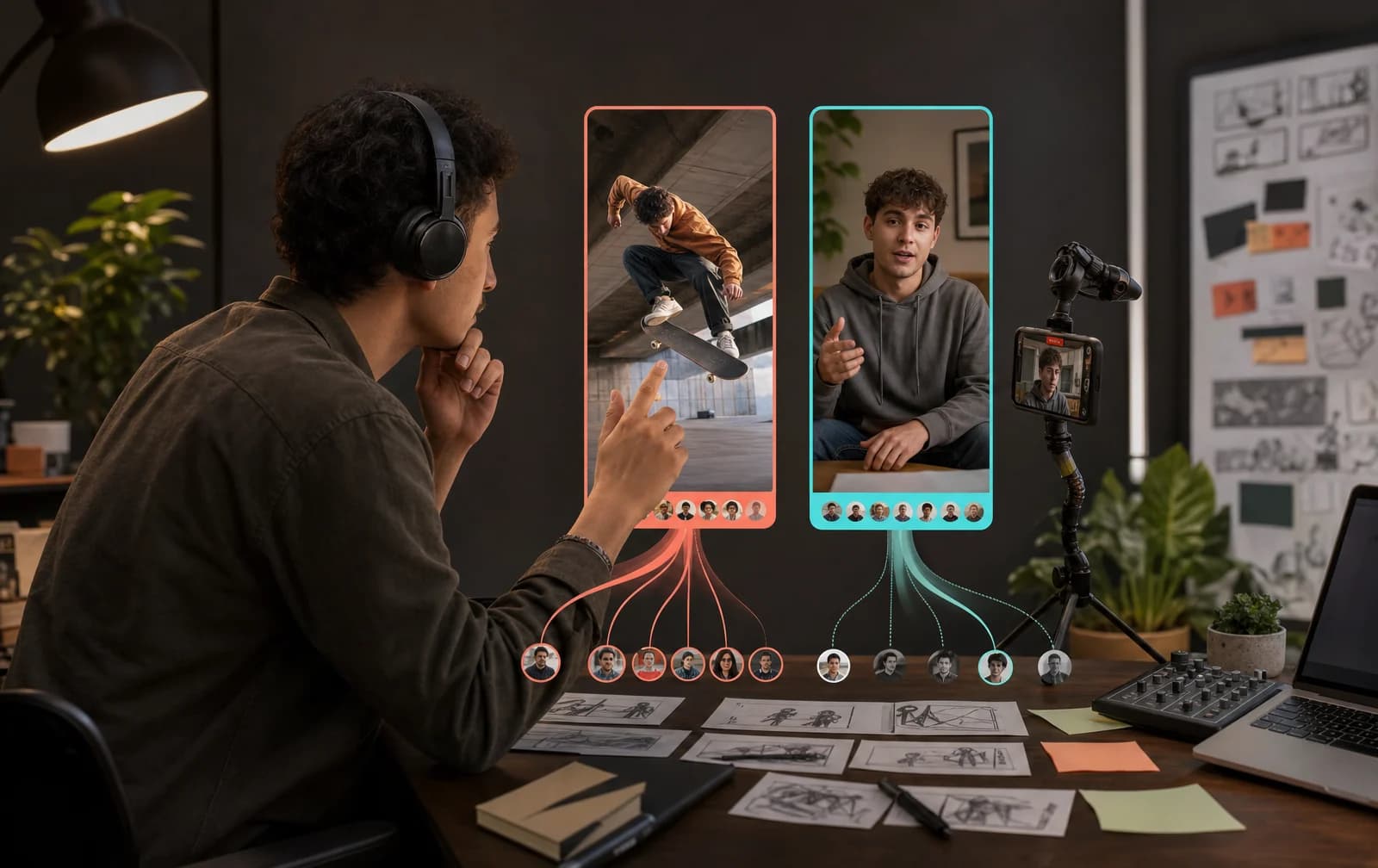
TikTok views fluctuate because distribution is a sequence of viewer and platform decisions, not a fixed delivery schedule. When views fall, changing the posting time, caption, edit and topic all at once makes the result harder to understand. A better response is to rule out eligibility problems, identify which signal group may be weak and test one meaningful change at a time.
TikTok describes three broad groups that influence recommendations: user interactions, content information and user information. The weight of each factor can vary, and TikTok says interaction signals such as time spent watching are often weighted more heavily for many users. It does not publish a universal completion threshold or a guaranteed path to the For You feed. The official recommendation-system explanation is the right starting point for a view-growth strategy.
Why TikTok views fluctuate
Two videos from the same account can receive very different view counts. That does not prove the account is permanently restricted, nor does it mean one hidden posting time rule decided the result.
The intended viewer may respond differently to the topic, opening, duration or payoff. The platform may also have different information about who is likely to care. TikTok explicitly tells creators that post views can fluctuate and recommends using the analytics dashboard to understand performance. See TikTok's guidance for videos that are not getting views.
Start with four diagnostic questions:
- Could the post be ineligible or restricted? Check notices and account status before editing.
- Can the intended viewer understand the video immediately? Confusion is different from a slow narrative.
- Does TikTok have clear content information? Topic, speech, text and caption should point in the same direction.
- Does the video earn continued attention? The premise should lead to a payoff that matches it.
Use the account's private analytics for the final judgment. A public TikTok Profile Analyzer can show the visible profile and recent public-post pattern, but it cannot reveal traffic sources, audience retention or recommendation eligibility.
Check eligibility before changing the edit
Creators often respond to low views by shortening the video or adding a louder opening. Those changes cannot solve a recommendation-eligibility issue.
Review the post for platform notices and check the account's status or analytics surfaces. Confirm that the video is public and that processing has completed. If a post has been identified as ineligible for recommendation, use the reason and appeal path shown by TikTok rather than guessing.
Also check basic publishing errors:
- The visibility is not set to 'Friends' or 'Only me'.
- No copyright or audio restrictions affect the post.
- The upload completed and plays correctly on another device.
- The caption, on-screen text and visual do not create misleading context.
- Reused material follows the platform's current rules and adds a legitimate creator contribution.
Avoid treating “shadowban” as the default diagnosis. It is a vague label that can hide several different issues: normal performance variation, audience mismatch, policy restrictions, private visibility or a weak content premise. A specific cause leads to a testable response.
Make the opening easy to understand
An opening does not need shouting, a false surprise or a fixed number of seconds. It needs to help the right viewer decide that the video is relevant.
Good openings establish at least one of these elements early:
- A recognizable problem.
- A concrete outcome the video will demonstrate.
- A visual change already in progress.
- A question the intended audience genuinely asks.
- A point of view that creates useful tension.
Compare these two premises:
“Here are some editing tips.”
“This caption setting makes product demos hard to read on a phone. Here is the cleaner layout.”
The second one names the problem, audience context and expected payoff. It does not need a manufactured mystery.
Remove setup that only serves the creator. Long greetings, repeated logos and explanations of what will eventually happen can delay the useful part. For story-led content, “clear” does not mean revealing the ending immediately. It means viewers understand the situation and why the next moment matters.
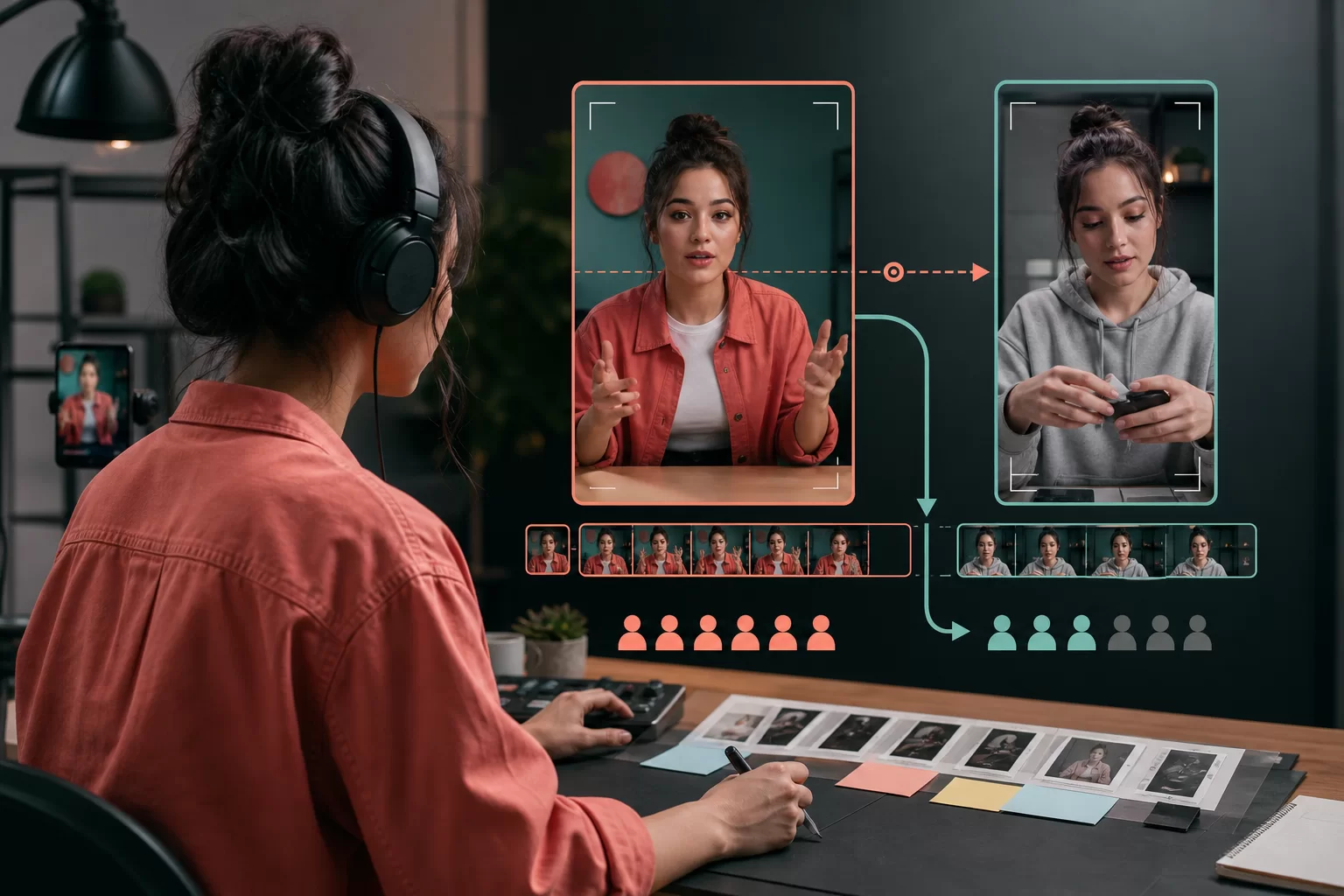
When reviewing a post, watch once without sound and once without reading the caption. Then ask a person from the intended audience what they believe the video is about. Their answer is more useful than copying a viral hook from an unrelated niche.
Match one video to one audience and one search intent
TikTok uses content information such as sounds and hashtags, while search recommendations can place substantial weight on how well content matches the query. That makes topical clarity useful for both For You distribution and TikTok search.
Choose one primary viewer question per video. Use the exact language naturally in speech, on-screen text or the caption when it accurately describes the content. Do not stuff several keyword variations into a caption that no one would want to read.
A search-aware video can follow this structure:
| Part | Job | Example |
|---|---|---|
| Opening | Confirm the viewer found the right topic | “TikTok video looks blurry after upload?” |
| Demonstration | Show the answer, process or comparison | Export and preview two versions |
| Context | Explain where the advice applies | Phone-first organic video |
| Close | Complete the task or point to a related next step | Save the clean preset for the next edit |
Topic specificity helps TikTok classify the post and helps a viewer choose it. “Three things about marketing” is broad. “Three product-page details to check before buying from a new store” gives the platform and viewer more information.
Hashtags should support that clarity, not substitute for it. Use labels that accurately describe the subject or community. Generic reach hashtags do not repair a video whose topic and intended audience remain unclear.
Build formats that earn a next view
One strong video can produce a temporary spike. A connected format gives people a reason to visit the profile and watch again.
Create repeatable series around an audience problem rather than a visual template alone. Examples include:
- Reviewing one landing-page mistake per episode.
- Testing one inexpensive recipe technique at a time.
- Translating one confusing industry term into plain language.
- Comparing two tools on one real task.
- Answering one recurring comment with a demonstration.
Name or number a series only when that improves navigation. Every installment should still make sense to someone seeing it first. Do not spend half the opening recapping previous episodes.
Profile continuity matters here. The bio, pinned posts and recent grid should confirm the topic that brought someone in. A viewer who likes a video about home-studio lighting may not follow if the rest of the account appears unrelated.
This is also where follower and view goals separate. Views measure distribution to a video. Follows require a profile-level reason to return. The same video can perform one job well and the other poorly.
What to do after posting
Low early views often trigger frantic edits, deletion and immediate reposting. That can erase useful evidence and makes it difficult to know whether the changed result came from the edit, timing, audience or normal variation.
After posting:
- Confirm the video is public, processed and free of visible restrictions.
- Respond to genuine questions where a reply adds information.
- Record the video topic, format, length and intended audience.
- Let the account analytics collect enough information for a useful comparison.
- Compare it with similar posts, not only the account's largest outlier.
If the content contains a factual error, broken export or policy problem, correcting it may be more important than preserving the test. Otherwise, leave the original in place long enough to learn from it.
To get more views on TikTok after posting, distribution beyond TikTok can be appropriate when it reaches a relevant existing audience. Embed the post in a useful article, share it with a community where it directly answers a question or send it through an owned channel. Avoid empty cross-posting that asks uninterested people to inflate a metric.
Do not rely on repeated self-views, engagement exchanges or comment spam. Those activities do not fix audience fit and can distort the evidence you need for the next creative decision.
Read TikTok analytics without a universal benchmark
A single benchmark cannot account for account size, audience, format, topic and video length. Use account-relative comparisons.
Group recent videos by purpose:
- Search answer.
- Entertainment or story.
- Product demonstration.
- Community response.
- Profile conversion or announcement.
Then compare videos inside a group. Look at the metrics TikTok makes available to the account, such as views, watch behavior, traffic source, audience information and engagement. Availability can vary by account and product version.
Turn patterns into decisions:
| Account-level pattern | Working diagnosis | Next controlled change |
|---|---|---|
| People leave before the premise is clear | Opening friction | State or show the problem sooner |
| Search traffic finds the post but viewing is weak | Intent mismatch | Answer the query more directly |
| Viewing is steady but profile activity is weak | No account continuity | Align bio, pins and related videos |
| A series repeatedly outperforms comparable posts | Strong format-audience fit | Produce another distinct installment |
| Distribution is weak across unrelated formats | Possible account or eligibility issue | Review notices, status and recent changes |
The point is not to explain every view with certainty. It is to choose the next test from observed evidence.

Organic views, Promote and view packages are different
There are three distinct ways a visible TikTok view count can change:
- Organic distribution: TikTok recommends or surfaces the video based on its systems and viewer behavior.
- TikTok Promote: A creator pays TikTok to promote eligible content through TikTok's own advertising product.
- Third-party view package: A service delivers an ordered view count to an eligible public link under its stated package terms.
Do not describe one as if it creates the outcomes of another. A TikTok views package changes the visible view count. It does not supply audience retention, search ranking, follower conversion or For You distribution, and it does not promise sales or virality.
If the actual goal is qualified discovery, work on recommendation eligibility, audience fit and content clarity. If the goal is to change a public visible count, review the package boundary and price separately. Measuring the wrong tool against the wrong outcome leads to bad decisions.
A 14-day TikTok views test
Use a short controlled test to learn which premise and format your audience understands.
Day 1: choose one audience problem
Write down the viewer, problem and useful outcome in one sentence. Select a topic you can address through several distinct examples.
Days 2 to 5: test three openings
Create three videos for the same audience problem. Keep the general format comparable, but change how the opening establishes relevance: a direct question, a demonstration in progress and a clear claim you can support.
Day 6: review, do not declare a winner
Check eligibility and analytics. Note where viewing behavior changes, how traffic sources differ and whether the intended audience responds. Avoid building a strategy from one high or low outlier.
Days 7 to 11: develop the clearest route
Create new posts that use the most understandable premise while changing the example or payoff. Improve captions and on-screen language around one accurate search intent.
Days 12 to 14: decide what to keep
Compare the set by purpose. Keep the format if it repeatedly produces useful audience behavior. Revise it if the topic is right but the opening or payoff causes friction. Stop it if the work does not serve the account's goal.
Pair the test with clean production settings from the TikTok video size guide. Technical quality cannot create demand, but it can remove crop, readability and export problems that make a useful idea harder to watch.
TikTok views questions
Why am I not getting views on TikTok?
First confirm that the video is public, fully processed and eligible. Then review the opening, topic clarity, audience fit and private analytics. View fluctuation alone does not identify one cause.
How do I get 1,000 views on TikTok?
There is no published formula that produces a specific organic view count. Build videos for a defined audience problem, use accurate topic information, review watch behavior and repeat formats that work across comparable posts.
Should I repost a TikTok with low views?
Reposting the same file immediately may not reveal why it underperformed. Fix a real error or make a meaningful creative change first, then treat the new version as a separate test.
Do hashtags get more TikTok views?
Relevant hashtags can add content information, but they do not replace a clear topic or useful video. Choose accurate labels rather than a block of generic reach terms.
Does posting time matter on TikTok?
Audience availability can affect early response, but there is no universal best hour. Use the activity and performance information available in your own account, then compare consistent tests.
Written by
Deniz Arslan
TikTok and short video
Covers watch behaviour on short video: the first frame, the point where viewers leave, and what a view count does and does not tell you.
All posts